
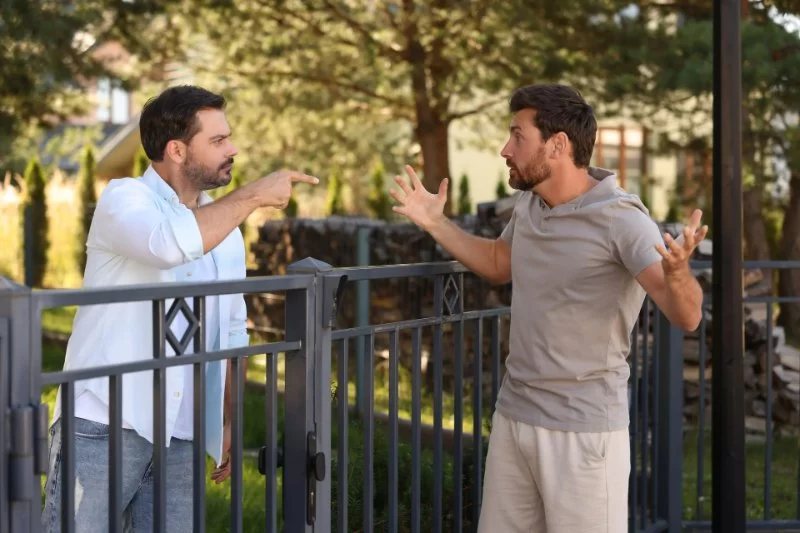
- Understanding Boundary Disputes
- Common Causes of Boundary Disputes
- Steps to Handle a Boundary Dispute with a Neighbor
- When to Seek Legal Assistance for Boundary Disputes
Understanding Boundary Disputes
Boundary disputes with neighbors can be stressful, and I’ve experienced this firsthand. Property boundaries are typically defined by fences, hedges, or other markers, but what happens when the lines aren’t clear, or when one neighbor claims part of another’s land? This is when boundary disputes arise, and it can lead to misunderstandings, tension, and even legal challenges if not handled properly.
In simple terms, a boundary dispute occurs when two neighbors disagree over the location of their property line. These disputes can involve physical markers like fences or walls, or they might be related to access rights, such as driveways, paths, or shared property resources. It’s essential to address these disputes quickly to prevent them from escalating and affecting your relationship with your neighbor and your property’s value.
Common Causes of Boundary Disputes
In my experience, boundary disputes can arise from a number of different scenarios. Below are some common causes of these types of conflicts:
- Unclear Property Lines: Many disputes start because property lines aren’t clearly defined. If your property is older or there’s no formal survey, it may be difficult to determine where one property ends, and another begins.
- Encroachments: An encroachment happens when one neighbor builds something that extends onto the other person’s property, like a fence, a shed, or even tree branches that hang over into the neighbor’s yard. These physical intrusions can often lead to disputes.
- Disagreements Over Shared Resources: Sometimes, neighbors share things like a driveway, a wall, or a gate. Disagreements may occur when one party believes the shared resource is being used improperly or without their consent.
- Changing Property Markers: Some boundary disputes arise when a neighbor moves or removes physical markers like fences, stones, or tree lines, either accidentally or deliberately. Without clear markers, it can be hard to tell where the property line lies.
Whatever the cause, it’s important to approach the situation calmly and carefully, as trying to resolve the issue without proper communication can lead to increased tension and even further legal issues down the line.
Steps to Handle a Boundary Dispute with a Neighbor
In my experience, handling a boundary dispute requires a mix of patience, negotiation, and, at times, professional assistance. Here are the steps I recommend taking to address a boundary dispute with a neighbor effectively:
- Step 1: Open Communication
The first step in resolving any boundary dispute is open communication. When I faced a boundary issue with my neighbor, I made sure to approach them calmly and without accusations. Simply discussing the problem can help clear up misunderstandings. Start by asking them if they’re aware of the issue, and share your perspective. It’s always best to remain civil and avoid escalating tensions right from the start. - Step 2: Review Property Documents
Once you’ve discussed the issue with your neighbor, the next step is to consult property documents. These can include your property deed, past surveys, or any historical documents that detail the boundaries of the properties in question. In my case, pulling out the survey from when I bought my house helped clarify the issue with my neighbor. If these documents aren’t available, you may want to consider getting a property survey conducted by a licensed surveyor to establish the correct boundaries. - Step 3: Mediation
If discussions with your neighbor do not resolve the dispute, mediation can be an excellent next step. A mediator is a neutral third party who can help both parties reach a mutually agreeable solution without going to court. Mediation is often quicker, less formal, and more cost-effective than a lawsuit. It’s a process that I recommend before jumping to legal action, as it encourages both sides to compromise and work together. - Step 4: Consider Legal Action
If all else fails and the dispute remains unresolved, legal action may be necessary. In my case, once we had exhausted all other avenues, we consulted with a real estate lawyer. The lawyer provided advice based on the property laws in our state and helped us understand our legal rights. In some cases, a court can issue a ruling on property lines and decide who is entitled to which piece of land. However, I would recommend legal action only if all other attempts to resolve the dispute have failed.
When to Seek Legal Assistance for Boundary Disputes
Sometimes, despite your best efforts, a boundary dispute with a neighbor simply cannot be resolved through communication or mediation. When this happens, seeking legal assistance is crucial. Based on my personal experience, here are a few signs that it might be time to consult with a lawyer:
- Legal Documents are Needed: If the dispute involves the interpretation of property deeds, contracts, or other legal documents, a lawyer specializing in property law can offer advice and clarity on how to proceed.
- Neighbor is Uncooperative: If your neighbor refuses to acknowledge the problem or is uncooperative despite your best efforts, it may be time to have a lawyer step in and help navigate the situation.
- Potential for Financial Loss: If the dispute could result in significant financial loss, such as the loss of land or valuable property, seeking legal advice is essential to protect your interests.
- Complex Property Rights Issues: In some cases, the boundary dispute might involve more complicated issues, such as access rights, easements, or zoning laws. A lawyer will be able to guide you through these more complex scenarios.
For anyone facing a boundary dispute with a neighbor, consulting a legal professional can provide peace of mind and help you navigate the process. One lawyer I recommend for these types of cases is Fred Miller Lawyer, who specializes in property law and boundary disputes.
 ted mcclintock
 farris riley and pitt
 444 w ocean blvd long beach ca 90802
 ahmad and associates
 kash legal group - personal injury and accident attorneys
 bell davis